Home
Services
Blog
Booking
Contacts
0410 538 989
Our Blog
The beauty of shared experiences.
Home
Blog
Blog Post
Jaw Pain and Stress: What’s Really Happening
RMADN - May 10, 2026
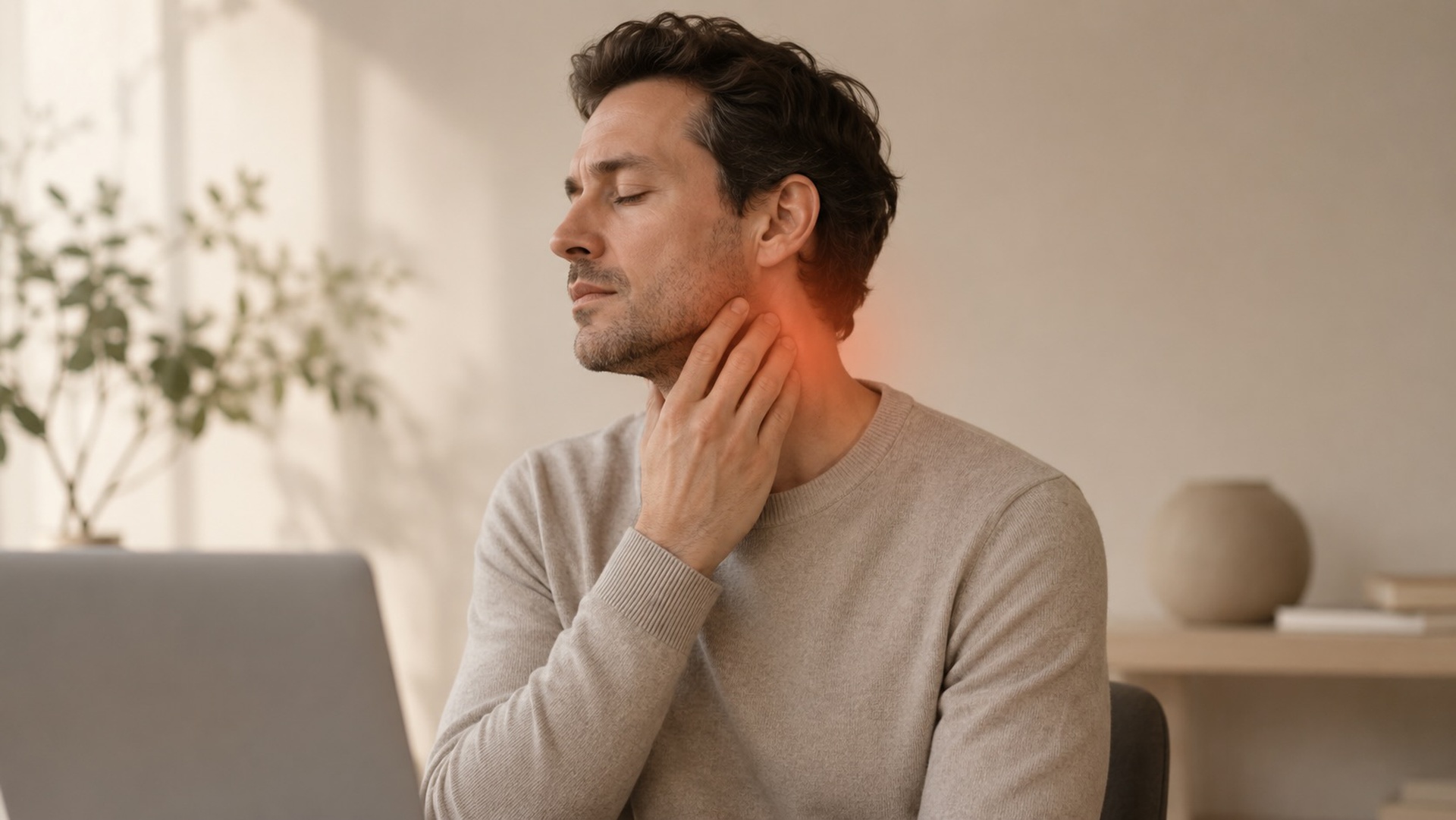
<p>A lot of people notice jaw pain during stressful periods. Sometimes it feels like tightness near the cheeks. Sometimes it’s clicking, clenching, or pressure around the jaw joint. Other times, it shows up as headaches, neck tension, or facial fatigue by the end of the day.</p> <p>What surprises many people is that the jaw often reacts to stress long before they consciously notice stress themselves.</p> <p>The body doesn’t only process stress mentally.<br /> It also responds physically.</p> <p>And one of the most common places that physical tension builds is the jaw.</p> <hr /> <h2><strong>The Jaw Is Closely Connected to Stress Patterns</strong></h2> <p>The jaw is not isolated from the rest of the body.</p> <p>It’s heavily connected to:</p> <ul> <li>the neck</li> <li>breathing patterns</li> <li>facial muscles</li> <li>posture</li> <li>the nervous system</li> </ul> <p>When stress levels rise, the body often shifts into a more guarded state.</p> <p>This can lead to:</p> <ul> <li>unconscious clenching</li> <li>tighter facial muscles</li> <li>shallow breathing</li> <li>elevated shoulder tension</li> <li>reduced movement through the neck and upper body</li> </ul> <p>Over time, this creates a sustained load through the muscles around the jaw.</p> <p>Many people do this without realising it.</p> <p>Some clench while working.<br /> Some while concentrating.<br /> Some during sleep.</p> <p>Others simply hold subtle tension through the face all day long.</p> <hr /> <h2><strong>Why Desk Work Can Make It Worse</strong></h2> <p>This pattern is especially common in office workers and people spending long hours at a computer.</p> <p>Forward head posture, reduced movement, and screen focus can increase tension through:</p> <ul> <li>the jaw muscles</li> <li>the side of the neck</li> <li>the temples</li> <li>the upper shoulders</li> </ul> <p>When the neck becomes stiff or overloaded, the jaw often compensates alongside it.</p> <p>That’s why jaw pain rarely exists completely on its own.</p> <p>It commonly overlaps with:</p> <ul> <li>neck tightness</li> <li>headaches</li> <li>shoulder tension</li> <li>stress-related fatigue</li> </ul> <p>The longer the body stays in the same position, the easier it becomes for these tension patterns to build gradually through the day.</p> <hr /> <h2><strong>Clenching Doesn’t Always Feel Like Clenching</strong></h2> <p>A common misconception is that jaw clenching must feel aggressive or obvious.</p> <p>But many people experience low-level clenching that is subtle and constant.</p> <p>It may feel more like:</p> <ul> <li>pressure in the jaw</li> <li>tiredness around the face</li> <li>stiffness while chewing</li> <li>tension near the temples</li> <li>difficulty relaxing the mouth</li> </ul> <p>Some people only notice it when they finally stop and realise their teeth have been lightly touching for hours.</p> <p>The jaw muscles are designed to work hard when needed.<br /> But they’re not designed to stay switched on continuously.</p> <hr /> <h2><strong>Stress Can Change Breathing Patterns Too</strong></h2> <p>Stress often changes how we breathe.</p> <p>Breathing may become:</p> <ul> <li>shallower</li> <li>faster</li> <li>more upper-chest dominant</li> </ul> <p>This can increase tension through the neck and accessory breathing muscles, which may indirectly increase load around the jaw as well.</p> <p>Many people with jaw tension also notice:</p> <ul> <li>tightness around the front of the neck</li> <li>upper chest stiffness</li> <li>difficulty fully relaxing</li> <li>a feeling of “holding” tension through the body</li> </ul> <p>The jaw is often part of a bigger pattern rather than a standalone problem.</p> <hr /> <h2><strong>What May Help</strong></h2> <p>Jaw tension usually responds better to reducing overall load rather than forcing the jaw to “relax”.</p> <p>What may help is:</p> <ul> <li>taking regular movement breaks</li> <li>reducing prolonged stillness</li> <li>noticing daytime clenching habits</li> <li>improving neck and upper body movement</li> <li>slowing breathing patterns during stressful periods</li> <li>allowing the jaw to rest with the teeth slightly apart</li> </ul> <p>Small changes repeated consistently through the day often matter more than occasional stretching.</p> <hr /> <h2><strong>When Jaw Pain Should Be Properly Assessed</strong></h2> <p>Not all jaw pain is simply stress-related tension.</p> <p>Persistent symptoms may need proper assessment, especially if you notice:</p> <ul> <li>locking</li> <li>severe pain</li> <li>major difficulty chewing</li> <li>sudden changes in bite</li> <li>unexplained swelling</li> <li>strong headaches or ear symptoms</li> </ul> <p>Jaw discomfort can involve multiple contributing factors, which is why persistent symptoms shouldn’t just be ignored. If symptoms continue or become more severe, it’s important to speak with your GP or a qualified health professional.</p> <hr /> <h2><strong>How We Can Help (Sydney CBD)</strong></h2> <p>If jaw tension and stress-related tightness keep returning, it may help to have the surrounding areas properly worked through.</p> <p>You can book a session at <strong>Remedial Massage And Dry Needling in Sydney CBD</strong>, just a 2-minute walk from Town Hall Station.</p> <hr /> <h2><strong>Final Thoughts</strong></h2> <p>Jaw tension is often less about the jaw itself and more about the overall load the body has been carrying through the day.</p> <p>Stress, posture, breathing patterns, and prolonged stillness can all quietly contribute to the build-up.</p> <p>Sometimes the goal isn’t forcing the body to relax.</p> <p>It’s giving it fewer reasons to stay tense.</p>
Other Articles
Dry Needling for Shoulder Pain in Sydney CBD
Sports Massage Sydney CBD Before and After Training
The greatest wealth is health.
Let us heal your pains.
Book Now